

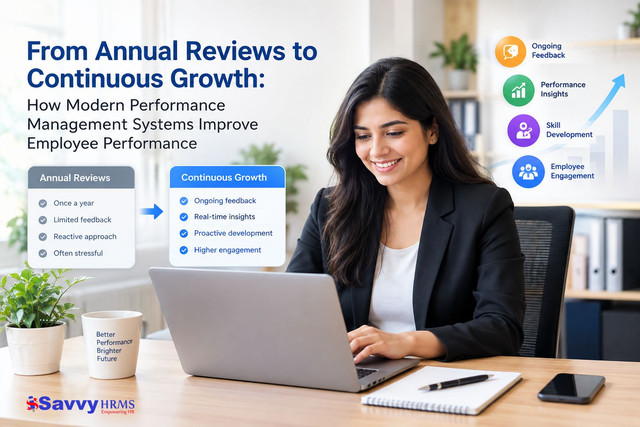


For years, employee performance was mostly talked about during a yearly meeting. Managers would look back at what the employee did during the year, talk about what was good and what was difficult and then decide on scores or what the employee should do next.
A lot can happen in a year. Employees might get tasks, work on different things, get better at their job or have problems that need help much sooner. So, waiting until the yearly meeting to discuss performance might not give employees a chance to get better when it is important.
That is why companies use performance management systems which help companies make performance talks happen all the time instead of just once a year.
What Are Performance Management Systems?
Performance Management Systems offer a process by which an organization plans, monitors, reviews, and evaluates employee performance. Managers and employees engage in this process to set performance standards, monitor achievements, provide feedback, discuss development needs and conduct reviews.
Traditional performance management often leaned on ratings. Modern Performance Management Systems focus more on communication and constant improvement.
This process can include goal setting, regular check‑ins, feedback, Performance Management System reviews, skill development, recognition and performance improvement plans.
A simple performance management cycle can be:
Goal Setting → Regular Check-ins → Feedback → Performance Tracking → Development → Review → New Goals
This approach gives employees more opportunities to understand what is expected from them and how their work contributes to the organization’s objectives.
Why Are Annual Performance Reviews No Longer Enough?
Annual performance reviews can certainly play a role in the performance process of an organization. However, certain difficulties arise if annual reviews become the sole mode of conducting performance evaluations.
For instance, when an individual faces trouble with one of his/her duties, discussing this problem at the end of December may not be the optimal way of providing timely help. In the same way, annual reviews may fail to give due credit to high-quality performance.
The working environment of employees is constantly changing; business objectives, customers’ demands, projects, and tasks can change during the course of the year.
How Does Continuous Performance Management Work?
Continuous performance management is about having conversations between employees and managers. Instead of just one big performance discussion each year, companies can have smaller, more frequent check-ins. These can happen every month, every quarter or based on what a team needs.
In these meetings, managers can look at goals, talk about what has been done, spot any problems and figure out what help might be needed. Employees get a chance to speak up too, like sharing their thoughts, asking questions and talking about career growth or learning opportunities.
This doesn’t mean holding reviews every week. It’s about building a habit of talking about performance all year long. It’s about keeping the conversation going, not just saving it for a year.
What Is the Role of Performance Management Software?
Managing continuous performance manually can become difficult when an organization has many employees. Managers may have to maintain spreadsheets, emails, documents, and separate records for goals and reviews.
Performance Management Software can bring these activities together in one digital platform.
Depending on the software, organizations can manage employee goals, performance reviews, feedback, competencies, development plans and performance records all in one place.
Managers can use the system to monitor progress. Employees can access employee goals and performance review information without relying only on manual communication.
I find that this can make the performance management process more organized and easier to track for everyone.
What are the key elements of modern performance management systems?
An effective performance management system may have a number of features that allow employees and managers to set and track individual, team, and company goals. Some examples of such features are
- regular feedback: Performance evaluations and reviews which take place continuously throughout the year and usually are held annually,
- self–assessment tools: Enabling individuals to assess and report on their own performance,
- performance management: Allowing managers to track and measure employee performance against established objectives,
- development planning: Helping employees identify their training and career development needs,
- performance improvement planning: Allows the organization to formally develop a plan to improve the performance of its staff,
- reporting and analytics: Help human resources and managers determine trends or problem areas and focus their improvement efforts.
These elements help build a truly continuous performance management system that replaces the traditional annual performance evaluation with a more continuous process.
How Do Continuous Feedback and Regular Check-ins Improve Employee Performance?
Regular feedback gives employees a clearer understanding of how their work is progressing.
For example, if an employee completes a project but some areas need improvement, the manager can discuss them soon after the work is completed. The employee can then apply that feedback to the next project.
The same approach can also be used for positive feedback. Employees can receive recognition when they achieve an important goal or contribute to a successful project.
Regular conversations can therefore make performance discussions more practical and connected to day-to-day work.
How Do Performance Management Systems Support Employee Development?
Employee performance is not about looking at what has already been done. It is also about preparing employees for what they will do in the future. Modern Performance Management Systems help companies find areas where employees can grow by using check-ins and feedback.
For instance an employee might do a job in their current role but still need to improve in leadership, communication, technical skills or project management to handle more responsibilities. Managers and HR teams can talk about these points during performance reviews.
Make development plans as these plans can include training, mentoring, new tasks or learning opportunities based on the employee’s needs. This way performance management becomes more focused on growth and long-term career development.
How Can Performance Management Software Help Managers?
Managers often have to manage performance conversations alongside their regular responsibilities. Having employee goals, feedback, review information, and development records in one system can make this process easier to organize.
Instead of searching through different files or emails, managers can access relevant performance information from the system.
The software can also provide reminders for reviews, goal updates, or feedback activities, depending on the available features.
This can help managers maintain regular communication with their teams and reduce the administrative work involved in performance management.
What Are the Benefits for Organizations?
Moving from reviews to continuous performance management can bring several benefits for organizations.
- Goal alignment: Employees can see how their own goals link to team and business objectives.
- Feedback: Issues and improvement areas can be discussed early.
- Employee involvement: Employees get chances to join performance discussions.
- Better documentation: Performance information can be kept in a digital format.
- Improved development planning: Training and growth needs show up through talks.
- Informed decisions: Managers and HR teams can use performance data when planning development, recognition and other employee activities.
These benefits become especially useful as organizations grow because managing employee performance gets more complex.
How Should Businesses Implement Continuous Performance Management?
Organizations do not necessarily need to change their performance process all at once. They can start with simple steps.
First, set goals for employees and teams. Employees should know what they are expected to achieve and how their performance will be measured.
Next, set up check-ins between managers and employees. These talks can be brief. Should focus on progress, problems, feedback and help.
Organizations should also promote two-way feedback. Performance management should not become a process where managers only judge employees. Employees should have a chance to talk about their experiences and what they need to grow.
Finally, businesses can use Performance Management Software to keep track of goals, reviews, feedback and performance details as the system expands.
Conclusion:
Overall, Employee performance management is slowly shifting from a yearly meeting to a steady ongoing process. Annual reviews still have value, yet setting goals, giving frequent feedback, holding check‑ins and discussing development help employees see their performance step by step over the year.
Modern performance management systems offer organizations a structure for handling this process and performance management software can unite performance‑related tasks in one digital space.
For companies that want to create a workplace that thrives on improvement, the aim is not only to track past employee performance. The aim is to give employees feedback, set clear expectations, provide helpful support and open doors for growth.
Looking to make employee performance management more organized?
Explore how Savvy HRMS can help your organization manage employee performance, goals, reviews, and development through a connected HRMS platform.
Book a free demo today and discover how Savvy HRMS can support a more structured approach to employee performance management.